
 All panels9 panel types
 By application7 uses
 CalculatorArea, count, BOQ
 Thickness guideU-values
 Unit converterft ↔ m, sq ft ↔ m²
 BrandsCompare in one quote
 Dispatch cities20 cities
 GuidesPrice, thickness, PIR
Are PUF panels fire safe?
Standard PUF is a combustible foam, so a PUF panel is not fireproof. FR-PUF and PIR cores resist ignition and flame spread better, and rockwool cores are non-combustible. Fire performance belongs to a tested panel system: ask for the certificate for your exact panel, and control hot work and wiring on site.
- PUF
- Combustible
- PIR / FR-PUF
- Better fire behaviour
- Rockwool
- Non-combustible core
- Ask for
- The test certificate
How do the cores behave in a fire?
| Core | Behaviour | Typical use |
|---|---|---|
| PUF | Combustible organic foam | Cold rooms, sheds, cabins |
| FR-PUF | PUF with fire-retardant additives; better than standard PUF | Where some improvement is asked for |
| PIR | Forms a stable char; resists flame spread better than PUF | Large food, pharma and insurer-specified buildings |
| Rockwool (mineral wool) | Non-combustible core; heavier, lower insulation per mm | Fire walls and compartment partitions |
| EPS | Combustible; melts and drips | Budget ambient cabins only |
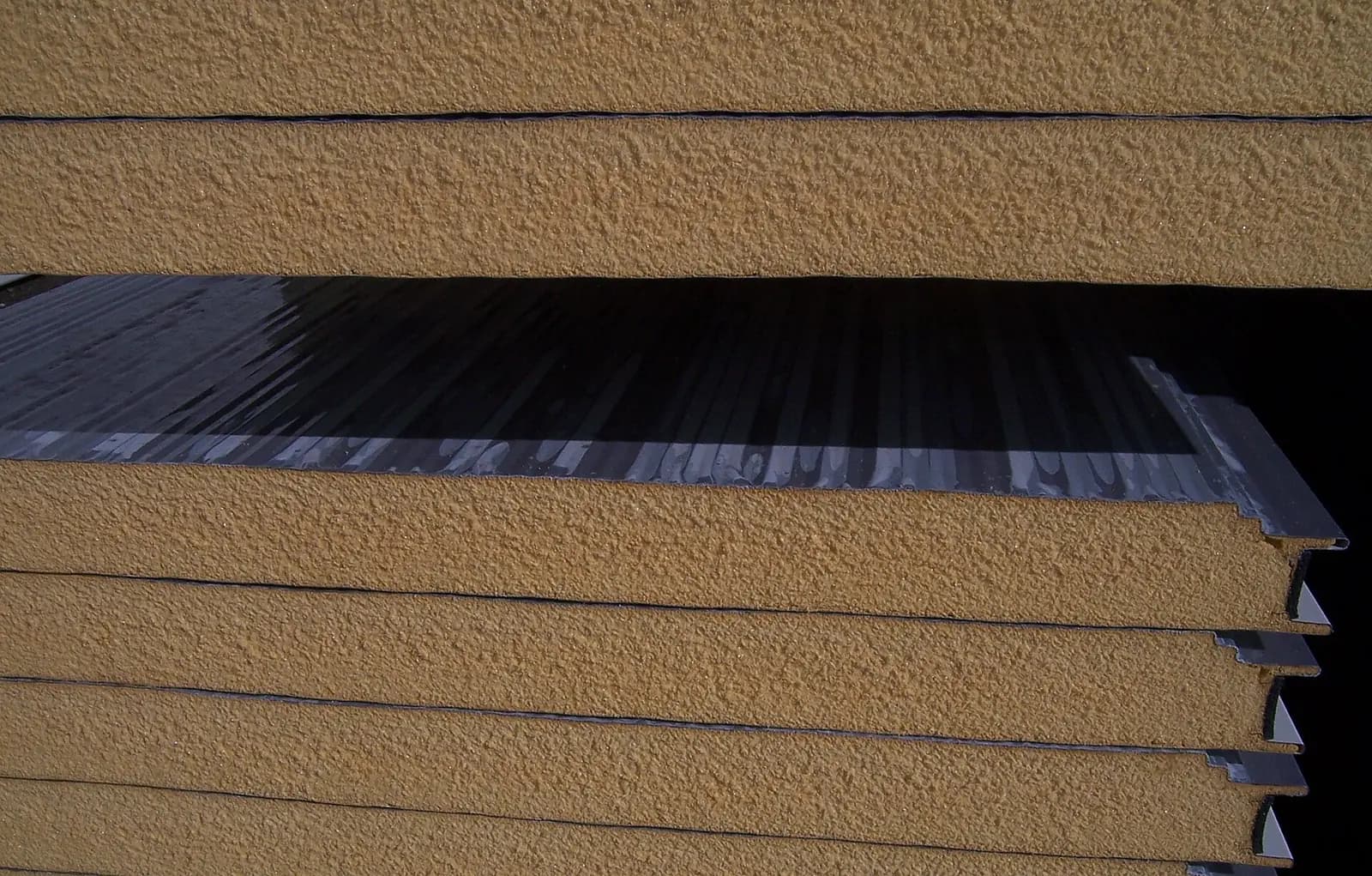
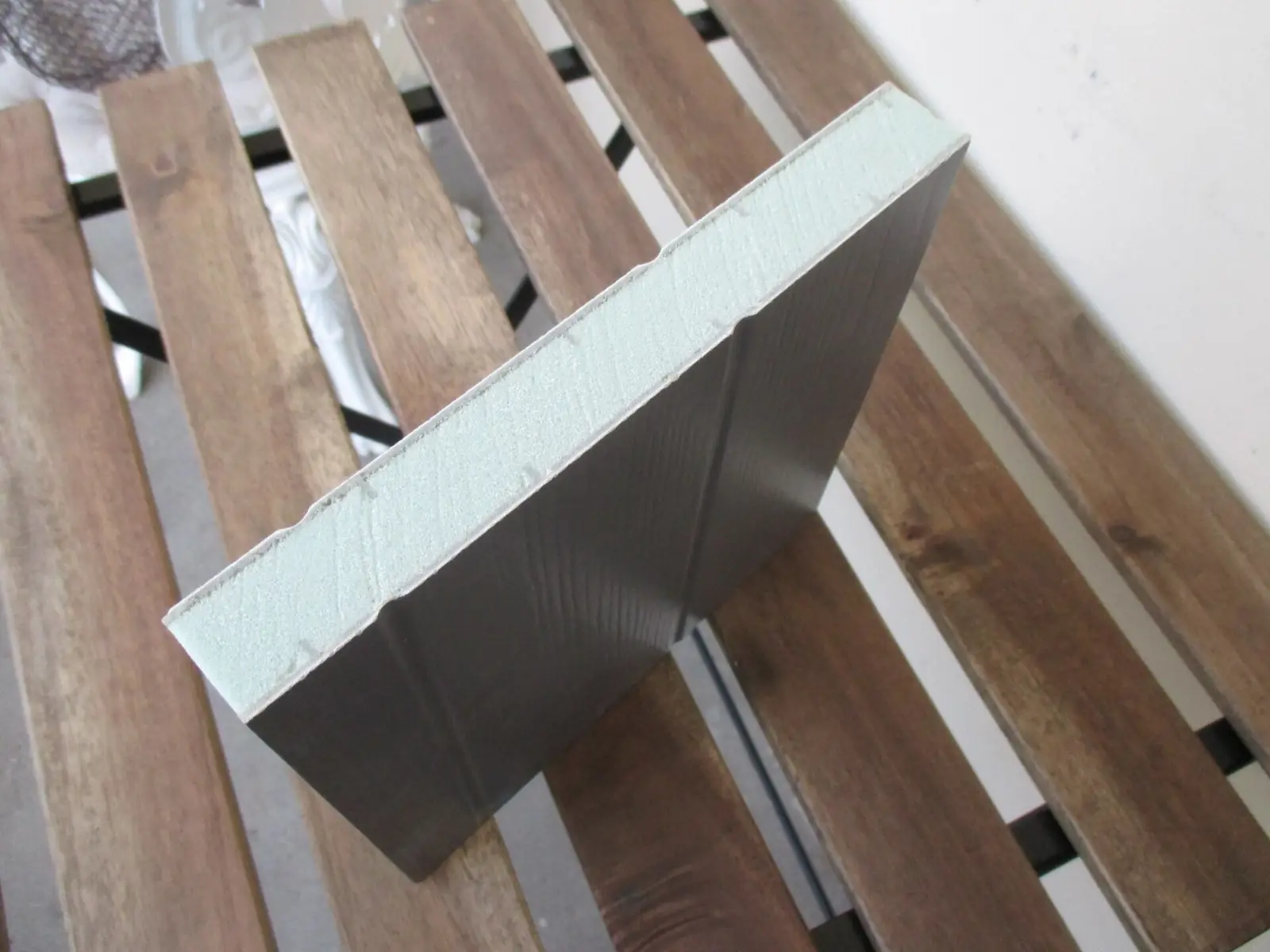
The steel skins protect the foam while they stay intact. Risk rises where the foam is exposed: cut edges, penetrations for pipes and cables, and damaged skins. Flashing over cut edges and sealed, sleeved penetrations matter for fire as well as for hygiene.
Where does the fire risk sit in a panel building?
Fires in insulated buildings rarely start in the panel itself. They start in what is around it: a welding spark on a nearby job, an overheated cable, a fault in a fan or defrost heater, or stored packaging that catches fire against a wall. The panel then decides how far and how fast the fire spreads, which is why the core choice and the site rules work together.
Large cold stores add two complications. They are big, connected volumes, and they are often unmanned at night. That is why insurers look at the core, at fire breaks between chambers, and at detection and sprinklers, not only at the panel datasheet.
Which fire certificates should I ask for?
Ask the maker for the test report or certificate that matches your requirement, for the exact core, thickness and system. Common schemes for sandwich panels:
- EN 13501-1: the European reaction-to-fire classification (for example classes such as B-s1,d0 for some PIR panels).
- FM Approvals: FM 4880 covers insulated wall and wall/roof-ceiling panels; often asked for by insurers of large stores.
- LPCB LPS 1181: the UK Loss Prevention Certification Board scheme for sandwich panel systems.
- Fire-resistance ratings (for example 60 or 120 minutes) apply to tested wall or ceiling systems, usually with rockwool cores.
In India, the National Building Code (NBC 2016, Part 4: Fire and Life Safety) and your local fire authority set the rules for the building. A fire consultant translates them into a panel specification. We send the maker’s documents with the quote and never claim a rating on a maker’s behalf.
What site rules prevent panel fires?
- Control hot work. Welding, grinding and gas cutting near panels need a permit, a cleared area, fire blankets, an extinguisher and a fire watch afterwards.
- Route wiring properly. Run cables in conduit or trays, never buried in the foam, and protect every penetration with a sleeve and sealant.
- Keep refrigeration equipment serviced. Defrost heaters, fans and lights inside the room should be installed and maintained to the maker’s instructions.
- Protect cut edges with flashing so the foam is not exposed.
- Keep the outside clear of stacked pallets, packaging and waste against panel walls.
- Tell your insurer what core you have; many ask for PIR or rockwool in large stores.
What does an insurer-ready panel specification include?
- The core type and grade (PUF, FR-PUF, PIR or rockwool) for each part of the building.
- The named standard and class, and the certificate number for the exact panel and thickness.
- Fire walls or fire breaks between chambers where the consultant asks for them, usually rockwool-core panels.
- How cut edges, penetrations and joints are protected (flashing, sleeves, sealant).
- Detection and suppression designed by the fire consultant, not by the panel supplier.
Send that list with your enquiry and we price only panels that carry the requested documents.
So which core should I pick?
If nobody has specified a fire class, standard PUF is the usual choice for small and medium cold rooms, with good site rules. If an insurer, client or consultant names a standard, buy the panel that carries that certificate, usually PIR. For fire walls, use rockwool. The PUF vs PIR guide compares the two in detail.
Transport extraFlashing as per your requirement