
 All panels9 panel types
 By application7 uses
 CalculatorArea, count, BOQ
 Thickness guideU-values
 Unit converterft ↔ m, sq ft ↔ m²
 BrandsCompare in one quote
 Dispatch cities20 cities
 GuidesPrice, thickness, PIR
What is the difference between PUF and PIR panels?
PUF (polyurethane) and PIR (polyisocyanurate) cores insulate almost equally, about k ≈ 0.022 W/m·K (typical). PIR is made with much more isocyanate, so it forms a stable char and behaves better in fire. Choose PIR when your insurer, client or fire consultant asks for it; standard PUF suits most cold rooms and sheds.
- k-value, both
- ≈ 0.022 W/m·K (typical)
- PUF density
- 38–42 kg/m³ (typical)
- PIR density
- 40–45 kg/m³ (typical)
- Combustible?
- Both are organic foams
What are PUF and PIR?
- PUF (rigid polyurethane foam)
- A closed-cell foam made by reacting a polyol with an isocyanate (MDI). It is the standard insulating core of Indian cold-room and roof sandwich panels.
- PIR (polyisocyanurate foam)
- A close relative of PUF made with a much higher proportion of isocyanate. The excess forms isocyanurate rings, a more heat-stable structure that chars instead of softening quickly in a fire.
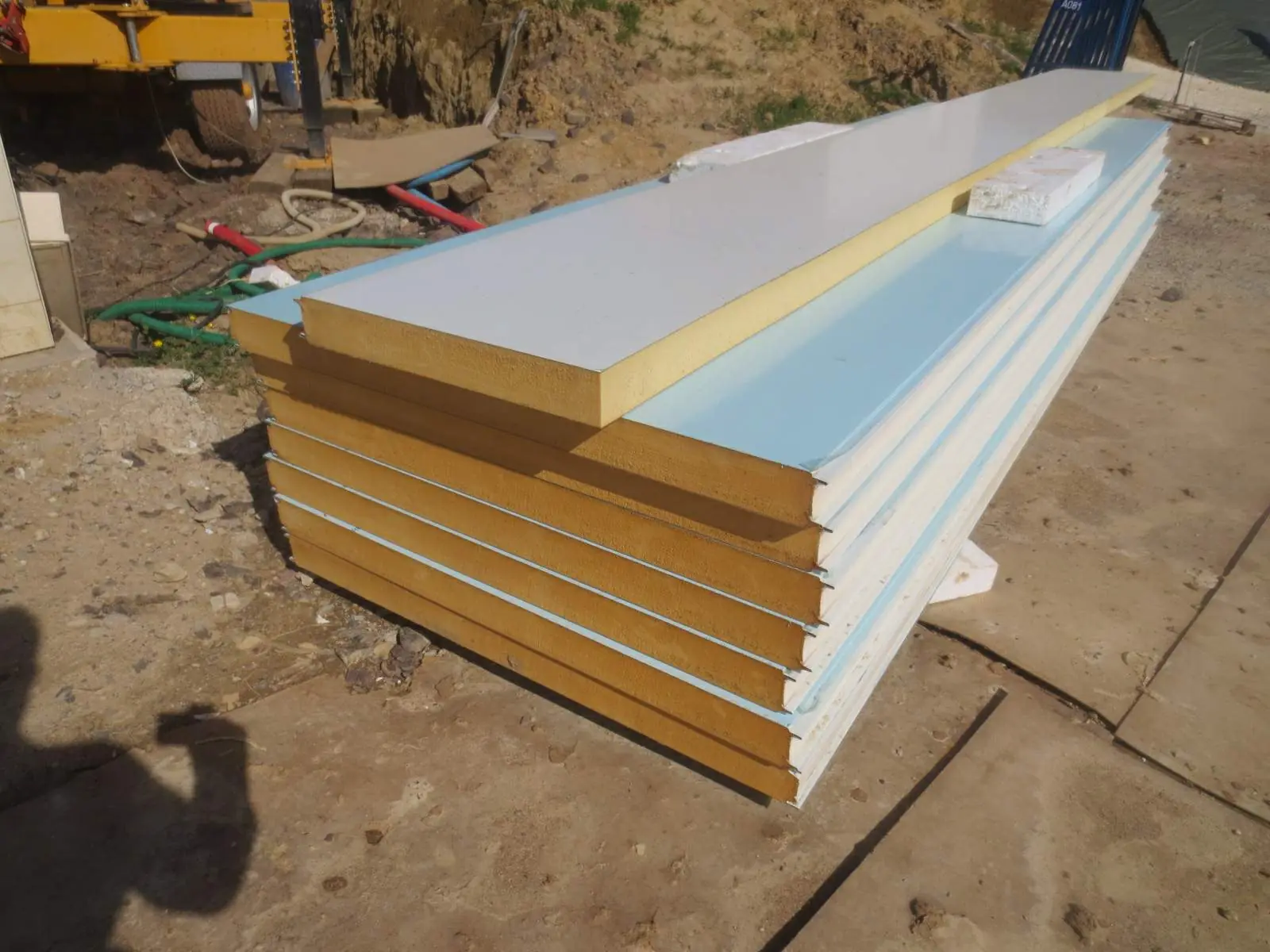
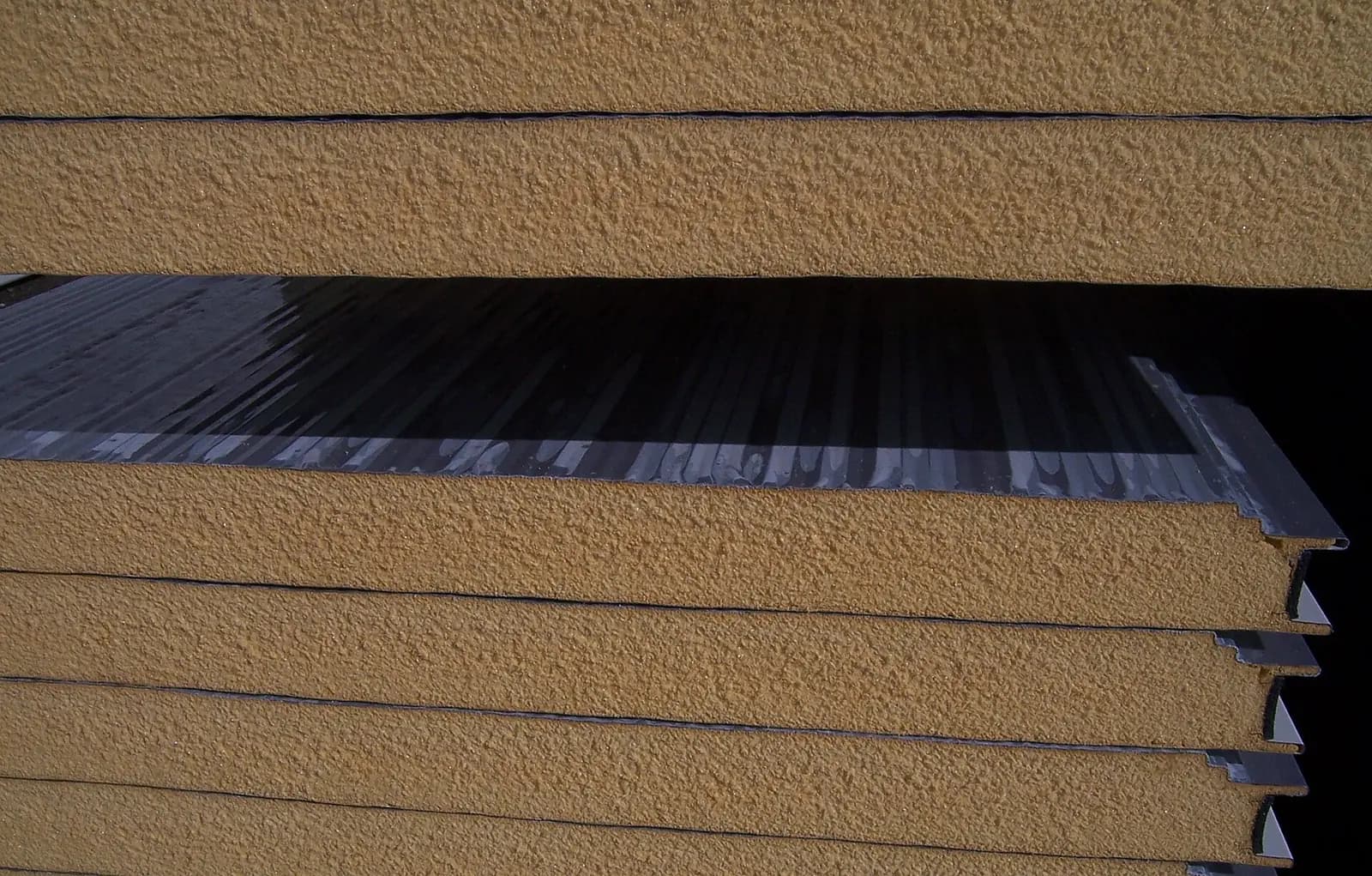
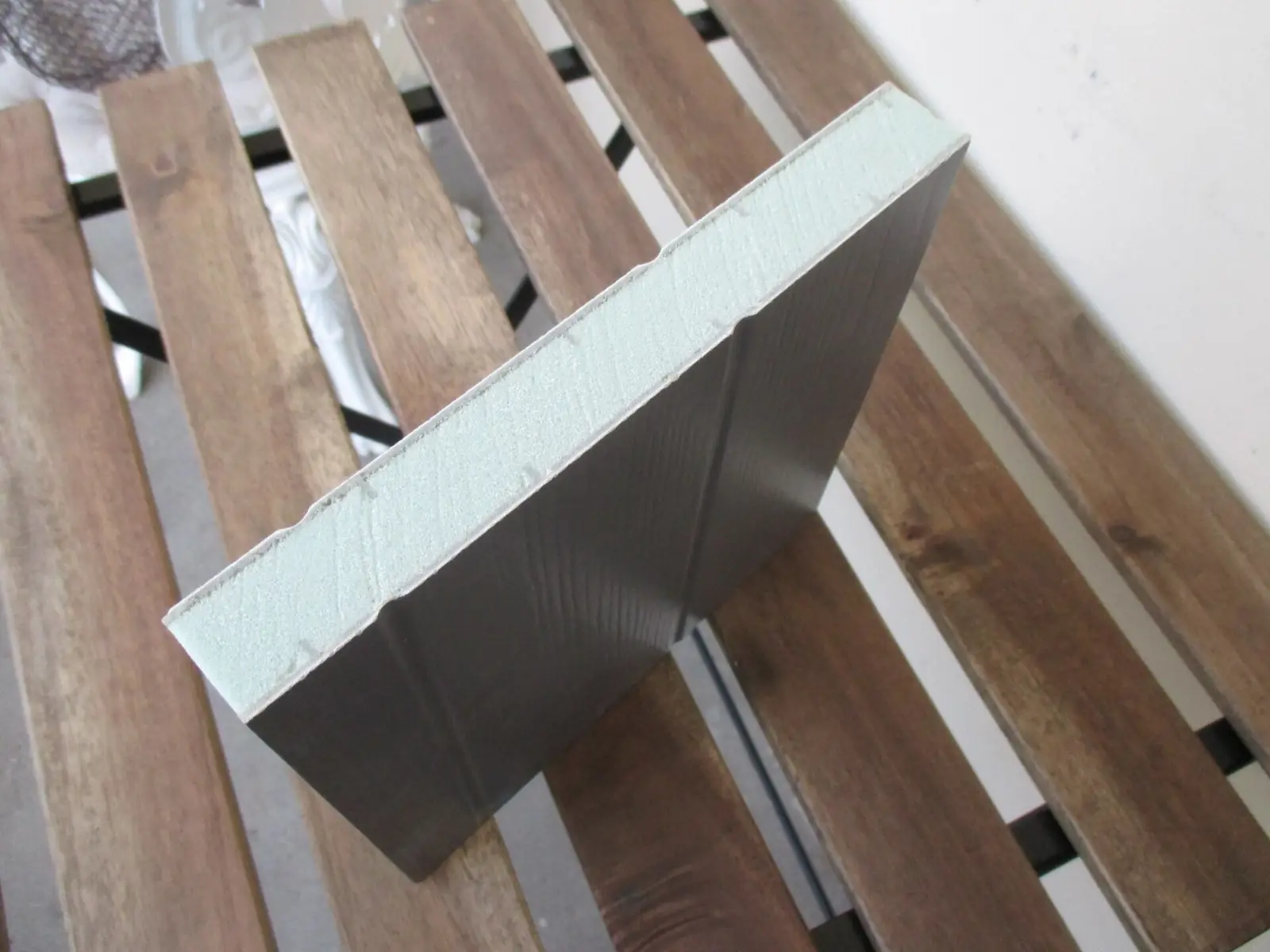
In a sandwich panel either foam is bonded between two coated steel skins. From the outside the panels look identical, so the core type must be stated in the quote and on the maker’s datasheet. In India, preformed rigid PUR and PIR foams for thermal insulation are covered by BIS standard IS 12436, and the cold-storage insulation code of practice is IS 661.
PUF vs PIR: how do they compare?
| Property | PUF | PIR |
|---|---|---|
| Thermal conductivity (k) | ≈ 0.022 W/m·K | ≈ 0.022 W/m·K |
| U-value at 100 mm (calculated) | ≈ 0.21 W/m²K | ≈ 0.21 W/m²K |
| Core density | 38–42 kg/m³ | 40–45 kg/m³ |
| Fire behaviour | Combustible; FR grades improve it | Better: forms a stable char; still an organic foam |
| High-temperature stability | Good | Better |
| Cost | Lower | Usually higher |
| Typical use | Cold rooms, chillers, sheds, cabins | Large food and pharma buildings, insurer-specified stores |
Because the k-value is about the same, a PIR panel does not need to be thicker or thinner than a PUF panel for the same insulation. The choice is about fire behaviour and the documents your project needs, not about insulation.
Is a PIR panel fireproof?
No. PIR is not fireproof and not non-combustible. It is an organic foam that resists ignition and flame spread better than standard PUF. If a wall must be non-combustible or carry a fire-resistance rating, the usual core is mineral wool (rockwool). See EPS and rockwool compared with PUF.
Fire performance belongs to a tested product, not to a foam name. Panels are classified under schemes such as EN 13501-1 (European reaction-to-fire classes), FM Approvals (FM 4880 for insulated wall and roof/ceiling panels) or LPCB LPS 1181. Ask for the certificate for the exact panel, thickness and system you are buying; we send the maker’s documents with the quote and never assume a rating.
What is FR-PUF?
Fire-retardant PUF is polyurethane foam with fire-retardant additives. Several makers offer it as a step between standard PUF and PIR. As with PIR, the improvement is only as good as the maker’s test report, so ask for it.
Do PUF and PIR lose insulation over time?
A little, in the first months. Fresh foam cells hold blowing gas that insulates better than air; as some of it slowly diffuses out, the k-value rises slightly and then settles. Steel skins on both faces slow this down a lot, which is one reason sandwich panels hold their performance well. Datasheets usually state an aged or declared value; the k ≈ 0.022 W/m·K used on this site is a typical aged figure.
The bigger long-term risk is water. Wet foam insulates badly, so sealed joints, intact skins and flashing over cut edges matter more for lifetime performance than the choice between PUF and PIR.
What should a PUF or PIR quote state?
- The core type in words: PUF, FR-PUF or PIR.
- Core density and thickness.
- The fire document offered, if any, with its standard and class.
- Skin gauge and coating on each face.
- Panel rate per brand, with transport extra and flashing as per your requirement.
When should I choose PIR over PUF?
- Choose PIR when the insurer, the client or a fire consultant asks for it; for large food-processing, pharma and distribution buildings; and where many people work inside the insulated envelope.
- Standard PUF is fine for most small and medium cold rooms, ripening chambers, mushroom rooms, sheds and cabins, where nobody has specified a fire class.
- Choose rockwool for fire walls and compartment partitions that need a tested fire-resistance rating.
Whichever core you choose, most fires in insulated buildings start from hot work (welding and grinding) or electrical faults. Our fire safety guide covers the site rules that matter as much as the core.
Transport extraFlashing as per your requirement