
 All panels9 panel types
 Today’s pricesBNAL list, per sq m
 By application7 uses
 CalculatorArea, count, BOQ
 Thickness guideU-values
 Unit converterft ↔ m, sq ft ↔ m²
 BrandsCompare in one quote
 Dispatch cities20 cities
 GuidesPrice, thickness, PIR
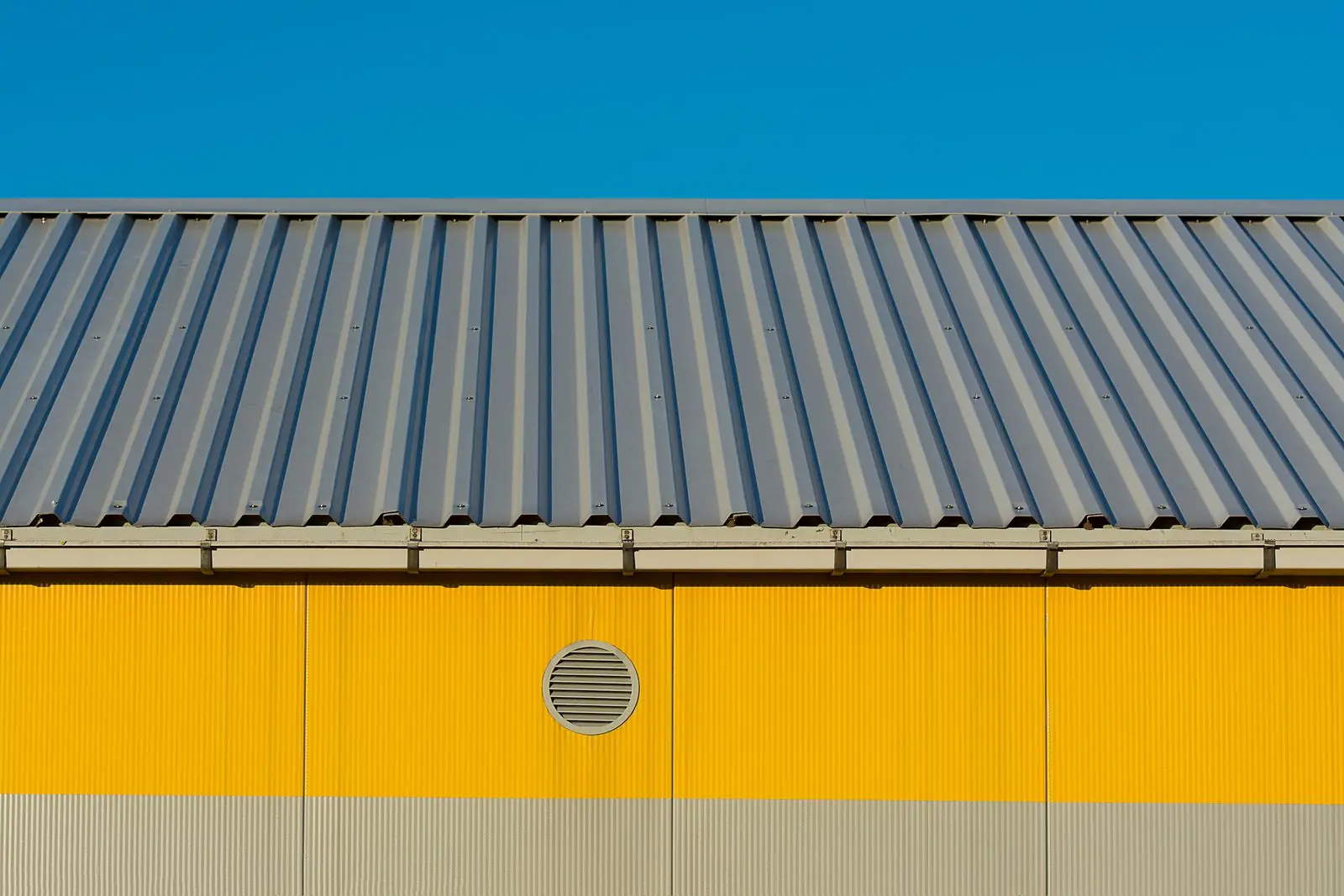
Is a PUF panel better than a tin shed?
For heat, noise and condensation, yes. A single tin or colour-coated sheet has almost no insulation (calculated U ≈ 5.9 W/m²K), while a 50 mm PUF panel is about 0.41 W/m²K, roughly 14 times less heat per degree. A tin sheet costs less to buy, so it still suits open sheds and storage that does not mind heat.
- Bare sheet, U (calculated)
- ≈ 5.88 W/m²K
- 50 mm PUF, U (calculated)
- ≈ 0.41 W/m²K
- 100 mm PUF, U (calculated)
- ≈ 0.21 W/m²K
- Roof panel range
- 30–100 mm (typical)
What is the difference between a tin shed and a PUF panel shed?
- Tin shed
- A shed roofed or clad with a single profiled metal sheet: galvanised (GI), galvalume, or pre-painted colour-coated sheet, usually 0.35–0.5 mm thick, screwed to purlins. There is nothing between the outside and the inside except one thin layer of steel.
- PUF panel shed
- A shed roofed or clad with sandwich panels: two coated steel skins bonded to a rigid polyurethane foam core, 30–100 mm thick for roofs and up to 150 mm or more for walls. The foam is the insulation; the steel gives strength and weather protection.
Both go up on the same kind of steel frame, and both are cut to length. The difference is what happens to heat, sound and moisture once the building is in use.
How much more heat does a tin sheet let in?
Heat through a roof or wall per square metre and per degree of temperature difference is its U-value (W/m²K). Lower is better. A single metal sheet adds almost nothing to the insulation, so its U-value is set only by the air films on each side. A PUF core adds a large thermal resistance on top of those films.
| Build-up | U-value | Compared with a bare sheet |
|---|---|---|
| Single tin / colour-coated sheet | ≈ 5.88 W/m²K | 1× |
| 30 mm PUF panel | ≈ 0.65 W/m²K | ≈ 9× less heat |
| 50 mm PUF panel | ≈ 0.41 W/m²K | ≈ 14× less heat |
| 80 mm PUF panel | ≈ 0.26 W/m²K | ≈ 22× less heat |
| 100 mm PUF panel | ≈ 0.21 W/m²K | ≈ 28× less heat |
In plain terms: on a hot afternoon a bare sheet passes the outside heat straight in, and the underside of the roof becomes a large radiator over the people and goods below. Even a 30–50 mm PUF roof panel cuts that dramatically. That is why insulated roofs are standard over cold rooms, workplaces and warehouses holding heat-sensitive stock.
What about rain noise and condensation?
Rain noise. A single sheet drums loudly in heavy rain because nothing damps it. The foam core of a sandwich panel damps the steel skin, so a panel roof is far quieter inside. This matters in offices, labour rooms, schools, clinics and homes.
Condensation. On cool nights a bare sheet’s underside falls below the dew point of the air inside, so water condenses and drips onto goods and floors. A PUF panel keeps its inner skin close to the inside temperature, which largely prevents this. Sealed joints keep moist air out of the foam itself.
Is a tin shed cheaper than a PUF panel shed?
To buy, yes. A single profiled sheet is one layer of steel; a sandwich panel is two skins plus a foam core, so its rate per square metre is higher. Published per sq m rates for every roof panel thickness are on our price board, starting with the 30 mm roof panel (ex-works, GST and transport extra). Single sheet rates vary by gauge, coating and maker, so compare quotes for your own specification.
Over the life of the building the comparison changes. An insulated roof lowers cooling loads in cold rooms and air-conditioned spaces, makes non-air-conditioned spaces more usable in summer, avoids drips on stock and removes the need for a separate false ceiling. Whether that is worth the extra purchase cost depends on what the building is for.
When should you choose each?
- A tin sheet is enough for open-sided sheds, vehicle parking, temporary site stores and storage of goods that do not mind heat or a little condensation.
- Choose PUF roof panels (30–50 mm) for warehouses, factories and workshops where people work under the roof or stock is heat-sensitive.
- Choose PUF panels (50 mm and up) for site offices, cabins, labour rooms and rooftop rooms where comfort matters.
- Choose cold-room panels (80–200 mm) for chillers, freezers, ripening and mushroom rooms: see thickness by temperature.
Replacing an existing tin roof with panels is common. Check the purlin spacing and the frame first: panel spans and fixing patterns come from the chosen maker’s span table, and a structural engineer should confirm the frame for the new loads.
Transport extraFlashing as per your requirement